
Check Out Our Reviews
GavinW-333 - Complete Garden/Landscape makeover.
**Excellent Garden Landscaping Service**
I’m really pleased with the work carried out by Pudding & Squish. They did a fantastic job transforming my garden, and the quality of their workmanship was excellent. They were professional, hardworking, reliable, and paid great attention to detail throughout the whole project.
Liam, Alex and the team were friendly and respectful, kept everything tidy, and completed the work to a very high standard. The finished garden looks amazing and is exactly what I was hoping for.
I would highly recommend them to anyone looking for professional and reliable garden landscaping services.
Great job and thank you for all your hard work.
What a good fence should do for the garden
Privacy where you need it
Fence type and height are guided by screening and everyday use.
Support that stays put
Posts, bases and gravel boards help the run stay stronger for longer.
A tidier boundary line
Gates and joins are planned so the edges of the garden feel resolved.
Privacy and boundaries that feel properly finished
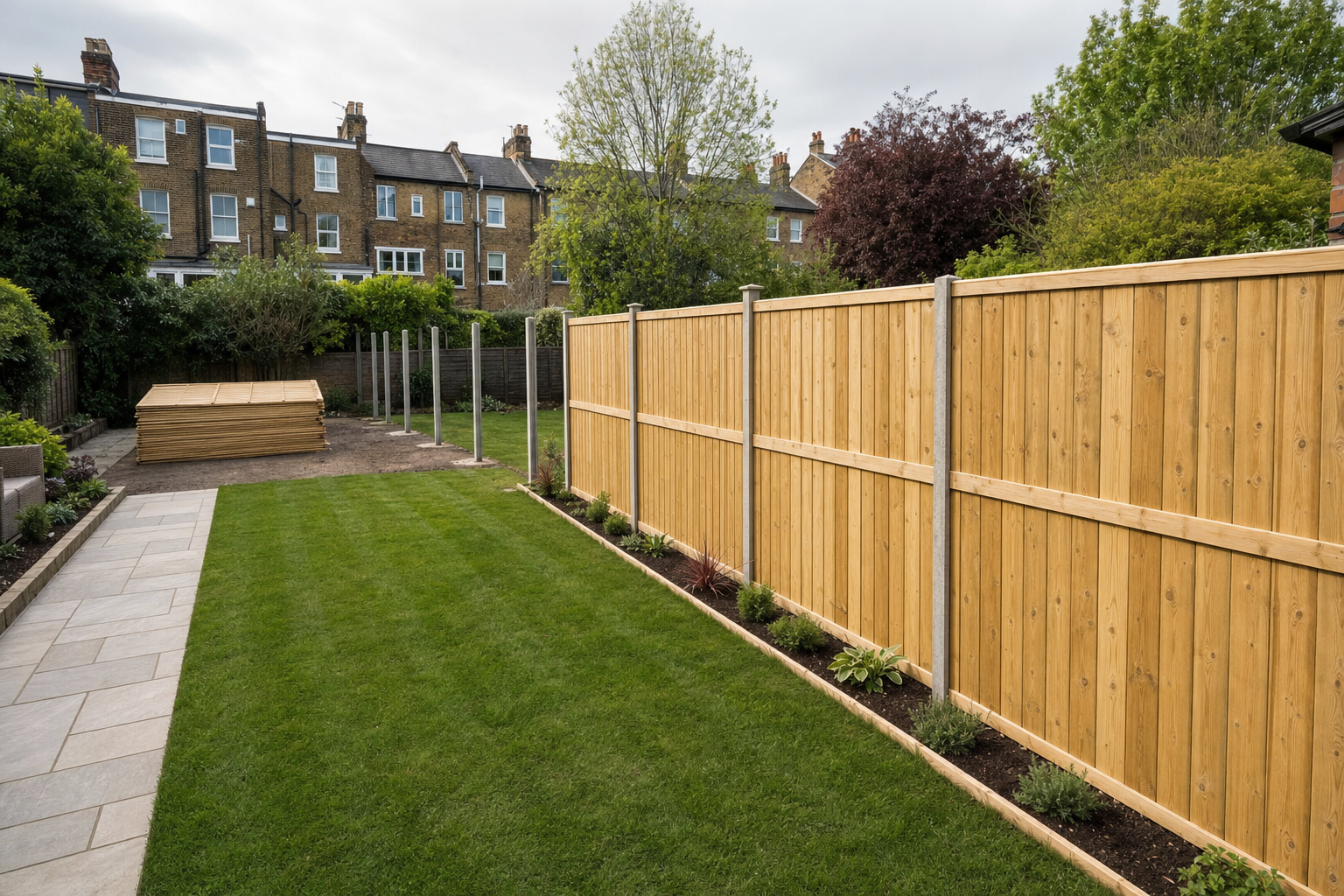
Fencing often gets noticed most when it is missing, leaning or see-through in all the wrong places. Good garden fencing helps mark boundaries, improve privacy, screen off certain views and organise different parts of the space. With Pudding & Squish Ltd., we look at what the fence needs to do before settling on a style, whether that points to close-board runs, panels, picket sections or trellis-topped designs. Slopes, exposed positions, planting clearance and access all shape the final decision. A fence that suits the garden should feel solid, useful and visually in step with the rest of the outdoor space.
Built with the support it needs
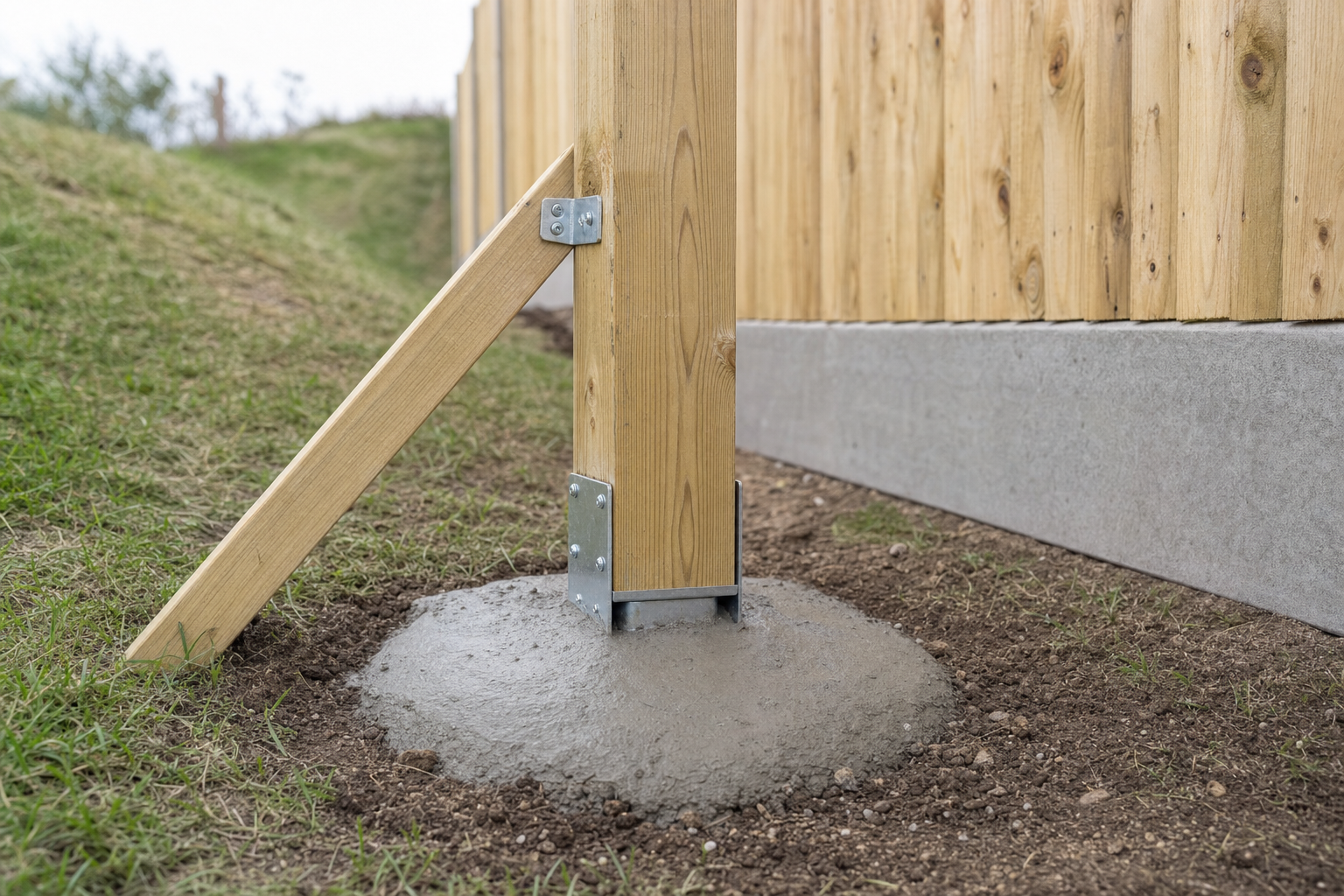
The strength of a fence comes from the parts you notice least when it is finished. A project with Pudding & Squish Ltd. includes attention to post spacing, stable foundations, level runs and gravel boards where they make sense. We also plan gates and the transition to walls or landscaped areas so the boundary stays practical rather than becoming a patchwork of unrelated pieces. That joined-up approach matters if the garden is being changed more widely, because fencing should help the whole space work better instead of simply closing it in.
Frequently asked questions
How do we choose the right type of garden fencing?
It comes down to the balance of privacy, appearance and the site conditions. Close-board styles can suit stronger screening, while panels, picket runs or trellis tops may fit a lighter look. We also consider slope, exposure and how the fence meets other boundary features.
Why do posts and foundations matter so much?
They do most of the heavy lifting. If posts are poorly spaced or the bases are weak, the fence above is more likely to move, lean or fail early. Good support at ground level helps the finished run cope better with weather, use and general garden life.
Can fencing be linked with wider garden changes?
Yes. If you are also adding gates, walls or landscaped areas, planning the fence as part of the same job can produce a cleaner boundary and a more practical layout. It is often the difference between a garden that feels designed and one that feels pieced together.