
Check Out Our Reviews
Alice Wood - Just before Christmas I had a family tragedy and upon returning home was overwhelmed at the amount of work our extension had left due to a previously bad builder and so, on a whim, I contacted Liam who had just posted on a local Facebook group. He arrived the next day with Alex and, seeing my state and state of the work needed in the extension, went away and sorted a quote that night. Not only that, he had the workers lined up, organised a payment plan, AND said it could be done in one week.
What a well-planned wall should achieve
More order outside
Walls can define zones, raise beds and control awkward level changes.
Material to suit the job
Brick, block and stone are chosen around purpose and surrounding style.
Proper support where needed
Footings, drainage and coping help the wall stay stable in use.
Walls that do more than mark an edge
A garden wall can be a boundary, a retaining structure, the side of a raised bed or the thing that finally gives the garden some order. With Pudding & Squish Ltd., we plan walls around what they need to do first, then choose a suitable material route in brick, block or stone to match that purpose and the surrounding property. Height, appearance, changes of level and nearby structures all affect the design. When those points are handled well, the wall becomes part of the wider outdoor layout instead of a separate feature that feels dropped into the space without much thought behind it.

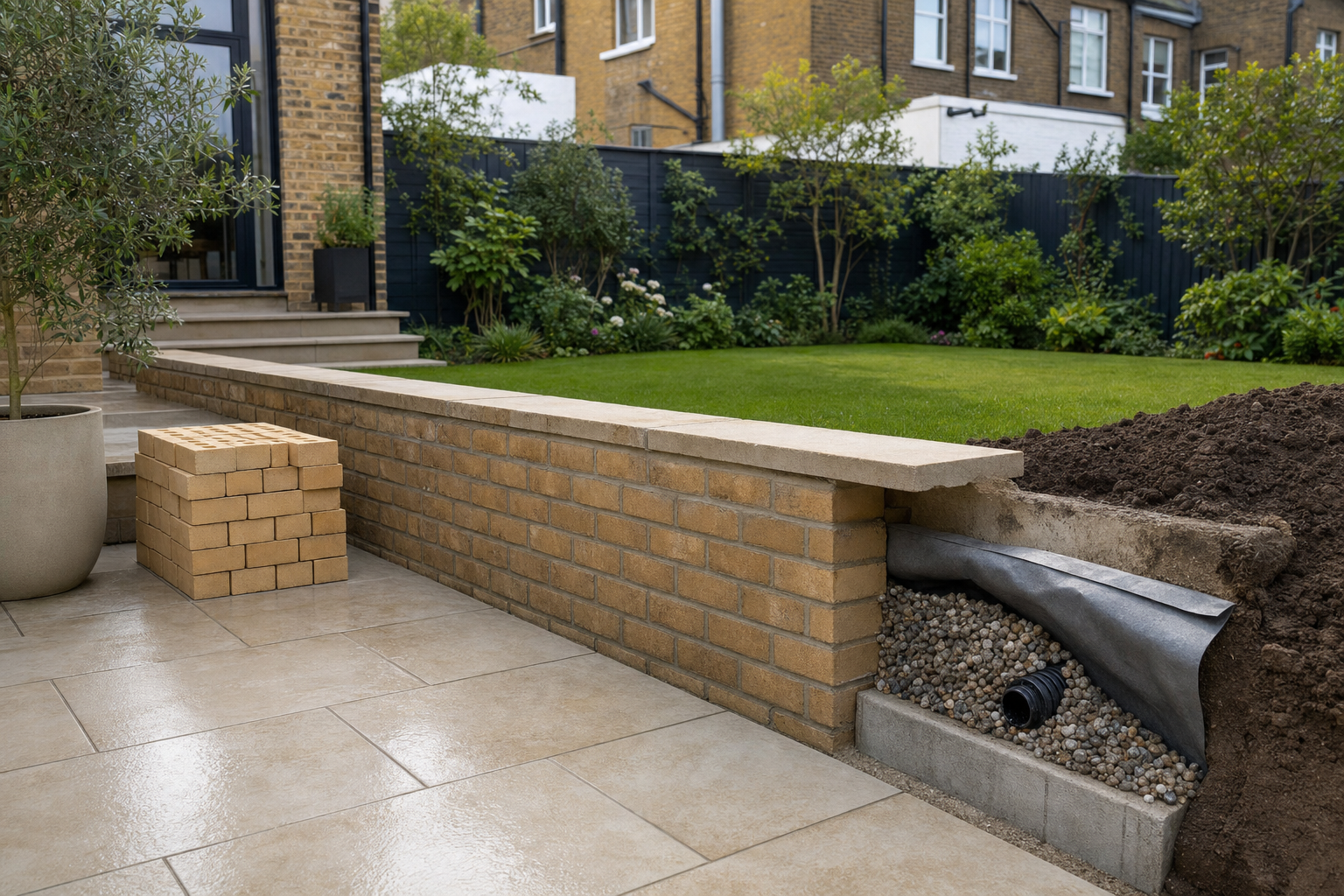
Strength below ground matters most
Garden walls live or die by the groundwork. A project with Pudding & Squish Ltd. includes attention to suitable footings, accurate alignment, drainage behind retaining sections and coping that stands up to the weather. We also think about how the wall will meet steps, paths and paved areas so level changes stay practical and visually coherent. Access can matter more than people expect too, especially where materials, spoil and working room are tight. Good planning at that stage helps avoid the sort of awkward surprises that tend to appear once digging begins.
Frequently asked questions
What jobs can a garden wall do in one project?
A wall can mark a boundary, retain soil, create raised beds or separate outdoor zones. Some do more than one job at once. The best approach depends on the site, the ground levels and whether the wall is mainly practical, visual or both together.
Why does drainage matter behind retaining walls?
When a wall holds back ground, water pressure can build up if there is no proper drainage route. That extra pressure can shorten the life of the wall and lead to movement over time. Dealing with it early is a key part of building the wall properly.
Can a new wall be linked with steps or paving?
Yes, and that often makes level changes feel much more natural. Planning walls alongside paths, paving or steps can help the whole garden work as one layout instead of leaving separate features to meet each other awkwardly after the main build is finished.