
Check Out Our Reviews
SimonL-1053 - Great team.
contracted pudding and squash to build a double side extension with a wrap around single at the back. I’ve never felt so stress free having work done to one of my houses. They communicate and understand what I want and the finish is amazing. They’ve just finished the rear patio, which looks amazing, just the drive way to go. I have already instructed them to start work on another property I have just bought to renovate.
Why a joined-up renovation helps
Several rooms, one plan
Connected work is organised together instead of treated as isolated jobs.
Priorities set early
We help separate repairs, upgrades and aesthetic changes before work starts.
Trade sequencing that makes sense
Structural, service and finish stages are ordered to avoid needless clashes.
Change more than one part of the house properly
Sometimes the problem is not one tired room. It is the way the house works as a whole. A home renovation can update several areas, modernise an older property or sort out a layout that has stopped making sense. With Pudding & Squish Ltd., we start by setting priorities around lifestyle, condition, available space, functionality and the character you want at the end of the job. That helps separate the work that really matters from the work that can wait. When the plan is clear, connected changes across the home feel purposeful rather than like a patchwork of one-off fixes carried out years apart.

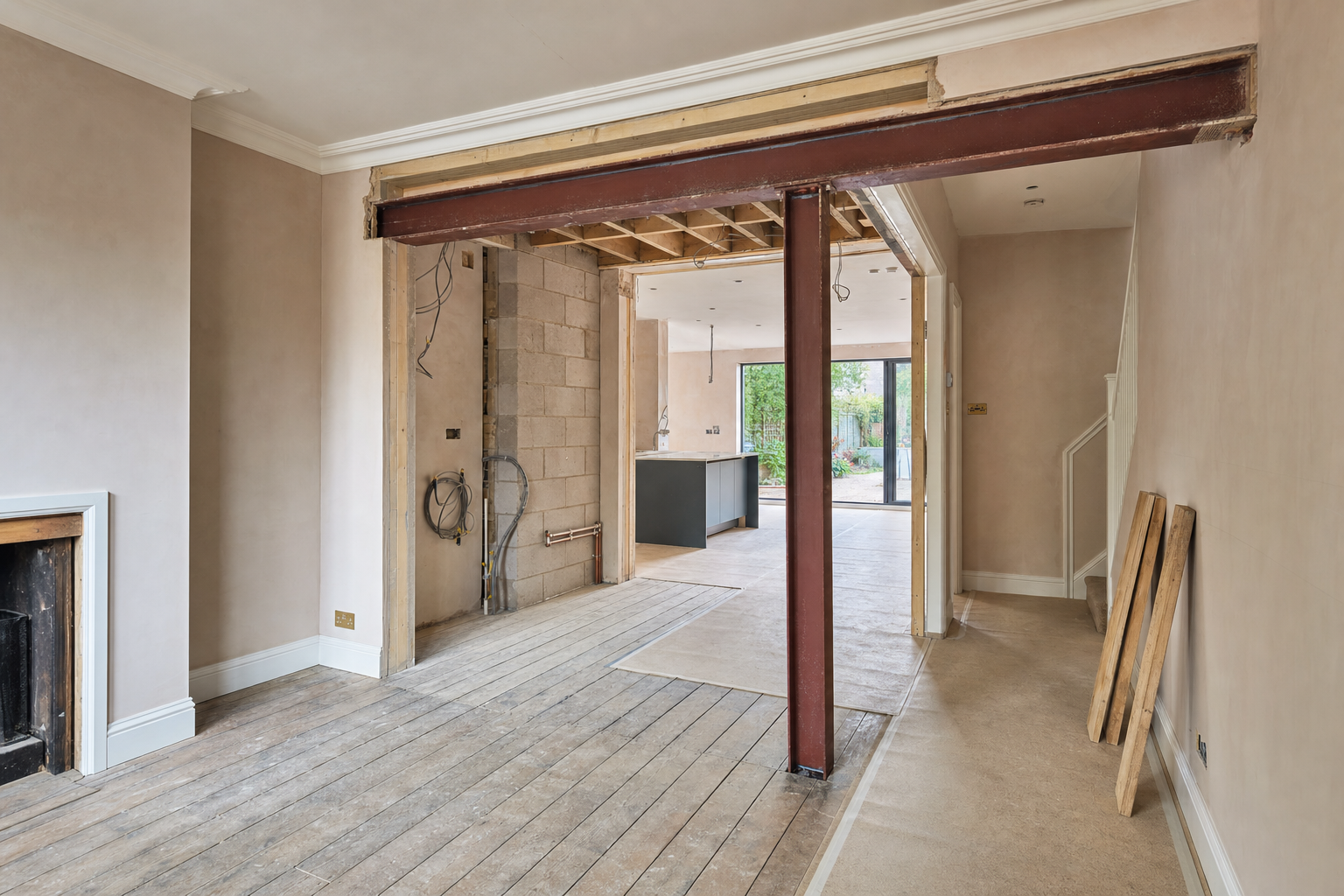
Sequenced to keep connected work joined up
Broader renovation work needs trades and rooms to be planned in the right order. A project with Pudding & Squish Ltd. can include design development, strip-out, structural alterations, building services, joinery, surfaces and final finishes, all coordinated as one programme where needed. We also help you distinguish between essential repairs, performance upgrades and purely visual changes so the scope reflects both the property and the budget. When everything is sequenced properly, the finished house tends to work better because the important decisions were made together rather than separately.
Frequently asked questions
When does a renovation make more sense than single jobs?
If several rooms need work, the layout is unsuitable or the property needs a broader update, renovation can be the clearer route. Planning connected changes together often saves rework later and helps the finished home feel coherent rather than pieced together.
What kinds of work can be included in a renovation?
That depends on the property and the brief, but it can involve strip-out, structural alterations, service updates, joinery, new surfaces and final finishes. Some projects are mainly about better flow, while others also tackle condition issues and performance upgrades.
How do we keep the scope of work under control?
A good start is to separate the work into essentials, performance improvements and visual upgrades. That gives the project clearer shape and helps decisions stay grounded in how the house needs to function, not just in the excitement of changing everything at once.